Titanium silicalite molecular sieve/glass bead composite material as well as preparation method and application thereof
Abstract
The present application relates to the field of catalyst technology, and in particular to a titanium silicon molecular sieve/glass microbead composite material and its preparation method and application. The preparation method of the titanium silicon molecular sieve/glass microbead composite material includes the following steps: placing the titanium silicon molecular sieve mother liquor and glass microbeads in a micro reaction device with an equivalent diameter of 1.6 mm to 16 mm, heating the micro reaction device to make the titanium silicon The molecular sieve mother liquid is crystallized and the titanium-silicon molecular sieve is loaded on the surface of the glass beads to prepare a titanium-silicon molecular sieve/glass microbead composite material. The preparation method provided by this application can shorten the growth cycle, and the particle size of the titanium silicon molecular sieve/glass microbead composite material produced is more uniform.
Term
16.9 yearsto projected expiry
Projected expiry 10 August 2043, counted from filing; an application has no term until it is granted.
- Priority and filed
- Published
- Today
- Projected expiry
4 claims: 1 independent, 3 dependent
- 1一种钛硅分子筛/玻璃微珠复合材料的制备方法,其特征在于,包括以下步骤: 将钛硅分子筛母液和玻璃微珠置于当量直径为1.6mm~16mm的微型反应装置内,对所述微型反应装置进行加热,使所述钛硅分子筛母液晶化并使钛硅分子筛负载于所述玻璃微珠的表面,制备所述钛硅分子筛/玻璃微珠复合材料。 2 .如权利要求1所述的制备方法,其特征在于,所述微型反应装置为密闭的管状通道; 和/或,所述微型反应装置的材质为金属。 3 .如权利要求1所述的制备方法,其特征在于,所述玻璃微珠与所述钛硅分子筛母液的质量比为1:(1~5); 和/或,所述玻璃微珠的粒径为70μm〜150μmo 4 .如权利要求1所述的制备方法,其特征在于,所述钛硅分子筛母液包括钛源、硅源、模板剂和水; 可选地,所述钛源与所述硅源的摩尔比为1: (0.01〜1);可选地,所述模板剂与所述硅源的摩尔比为1: (0.1-0.7); 可选地,所述硅源与所述水的摩尔比为1 : (50〜100)。 5 .如权利要求4所述的制备方法,其特征在于,满足以下特征中的至少一项: 1)所述钛源包括钛酸四乙酯、钛酸四丁酯及四氯化钛中的一种或多种;
- 22)所述硅源包括原硅酸四乙酯和/或硅溶胶;
- 33)所述模板剂包括四丙基氢氧化铵、四丁基氢氧化铵及哌啶季铵碱氢氧化铵中的一种或多种。 6 .如权利要求4所述的制备方法,其特征在于,所述钛硅分子筛母液是采用包括如下步骤的方法制得的: 将所述钛源溶于有机溶剂中,制备含钛源的有机溶液; 将所述模板剂、所述硅源、所述含钛源的有机溶液及水混合,陈化,去除所述有机溶剂, 制备所述钛硅分子筛母液。 7 .如权利要求6所述的制备方法,其特征在于,满足以下特征中的至少一项: 1)所述有机溶剂包括醇类溶剂和/或烷烃类溶剂; 2)所述陈化的温度为20℃〜80℃ ,时间为3h〜24h; 3)所述有机溶剂与所述钛源的摩尔比为1: (0.001 -0.003);
- 44)所述去除所述有机溶剂的方法为加热,所述加热的温度为60℃~95℃,时间为10min 〜45min。 8 .如权利要求4所述的制备方法,其特征在于,在所述对所述微型反应装置进行加热后,还包括:对加热后所得材料进行焙烧去除所述模板剂的步骤; 可选地,所述焙烧的温度为550℃~600℃,时间为5h-8h。 9 .如权利要求1-8任一项所述的制备方法,其特征在于,所述对所述微型反应装置进行加热的加热温度为100℃~170℃ ,加热时间为0.1h-24h。 10 .如权利要求1-8任一项所述的制备方法,其特征在于,在将所述玻璃微珠置于所述微型反应装置内之前,还包括采用亚临界状态的水对所述玻璃微珠进行刻蚀、酸洗、水洗、 干燥及焙烧的步骤; 可选地,所述酸洗的步骤包括:将所述玻璃微珠置于浓度为0.5M-1.0M的无机酸中浸 泡5h〜8h; 可选地,所述水洗的水流速度为3mL/min〜5mL/min,时间为5h〜8h; 可选地,所述干燥的温度为80℃〜120℃; 可选地,所述焙烧的温度为400℃~600℃,时间为3h〜6h。 11 .一种钛硅分子筛/玻璃微珠复合材料,其特征在于,采用如权利要求1-10任一项所述的制备方法制得。 12 .如权利要求11所述的钛硅分子筛/玻璃微珠复合材料,其特征在于,所述钛硅分子筛/玻璃微珠复合材料中的钛硅分子筛为纳米颗粒,所述纳米颗粒的平均粒径为190nm~ 240nm。 13 .如权利要求11或12所述的钛硅分子筛/玻璃微珠复合材料作为催化剂的应用。
Independent claims4
165 paragraphs, as filed
Titanium silicon molecular sieve/glass microbead composite material and its preparation method and application technology field
[0001] The present application relates to the field of catalyst technology, and in particular to a titanium silicon molecular sieve/glass microbead composite material and its preparation method and application.
Background technique
[0002] Titanium silicon molecular sieve, referred to as TS-1, is a molecular sieve of the ZSM-5 series in which titanium element replaces the aluminum element in the silicon-aluminum molecular sieve. It has an MFI topology and a two-dimensional ten-membered ring channel system. The sinusoidal channel aperture along the crystal plane (100) direction is 0.51nmX 0.55nm, and the straight channel aperture along the crystal plane (010) direction is 0.53nmX 0.56nm. Due to the special pore structure and the introduction of titanium atoms, the oxidation system composed of titanium-silicon molecular sieve and hydrogen peroxide has the advantages of mild reaction conditions, green and environmentally friendly oxidation process, etc., so it can be widely used as a catalyst in the oxidation reaction of alkanes and the ring synthesis of olefins. Oxidation reaction, oxidation reaction of alcohols, oximation reaction of ketones and hydroxylation reaction of phenols. It is a heteroatom molecular sieve catalyst with excellent catalytic performance and high selectivity.
[0003] However, the titanium-silicon molecular sieve nanoparticles that are traditionally obtained by directly reacting silicon sources and titanium sources in stainless steel crystallization kettles have the following problems: First, because the titanium-silicon molecular sieve nanoparticles have high surface energy, during actual use Nanoparticles can easily agglomerate into micron-sized particles. For example, titanium-silicon molecular sieve nanoparticles with an average particle size of only 350nm under ultrasonic and stirring conditions will still agglomerate into particles with an average particle size of 425μ1h in the reaction solvent, resulting in catalytic The activity is reduced; secondly, it is difficult to separate and recover titanium-silicon molecular sieve nanoparticles after the reaction. Currently, the nanoparticles are mainly separated from the reaction system by membrane filtration. However, after several uses, it is easy to cause the membrane pores to become blocked, resulting in the overall separation membrane Unable to be used, the replacement cost of the membrane accounts for a significant proportion of the entire process cost. In addition, using a crystallization kettle for reaction will also lead to the disadvantages of a long growth cycle (6 to 30 days) of titanium silicon molecular sieve nanoparticles, uneven particle size, and high cost.
Contents of the invention
[0004] Based on this, it is necessary to provide a titanium silicon molecular sieve/glass microbead composite material that can shorten the growth cycle and have a more uniform particle size and its preparation method and application.
[0005] In the first aspect, the present application provides a preparation method of titanium silicon molecular sieve/glass microbead composite material, comprising the following steps:
Titanium-silicon molecular sieve mother liquor and glass beads are placed in a micro-reaction device with an equivalent diameter of 1.6mm~16mm, and the micro-reaction device is heated to crystallize the titanium-silicon molecular sieve mother liquid and make the titanium-silicon molecular sieve Loaded on the surface of the glass microbeads, the titanium silicon molecular sieve/glass microbeads composite material is prepared.
[0007] In some embodiments, the micro-reactor is a closed tubular channel;
[0008] And/or, the material of the micro reaction device is metal.
[0009] In some embodiments, the mass ratio of the glass beads and the titanium silicon molecular sieve mother liquor is 1: (1~5);<sup>[0010]</sup> And/or, the particle size of the glass microbeads is 70μm~150μmo
[0011] In some embodiments, the titanium silicon molecular sieve mother liquor includes titanium source, silicon source, template agent and water;
[0012] Optionally, the molar ratio of the titanium source and the silicon source is 1: (0.01~1);
[0013] Alternatively, the molar ratio of the template agent to the silicon source is 1: (0.1~0.7);
[0014] Optionally, the molar ratio of the silicon source to the water is 1: (50~100).
[0015] In some embodiments, the preparation method satisfies at least one of the following characteristics:
1) Described titanium source includes one or more in tetraethyl titanate, tetrabutyl titanate and titanium tetrachloride;
2) The silicon source includes tetraethyl orthosilicate and/or silica sol;
3) Described template agent includes one or more in tetrapropylammonium hydroxide, tetrabutylammonium hydroxide and piperidinium quaternary ammonium hydroxide.
In some embodiments, the titanium silicon molecular sieve mother liquor is prepared by a method comprising the following steps:
[0020] The titanium source is dissolved in an organic solvent to prepare an organic solution containing the titanium source;
[0021] The template agent, the silicon source, the organic solution containing the titanium source and water are mixed, aged, and the organic solvent is removed to prepare the titanium silicon molecular sieve mother liquor.
[0022] In some embodiments, the preparation method satisfies at least one of the following characteristics:
1 ) The organic solvent includes alcohol solvents and/or alkane solvents;
2) The temperature of the aging is 20°C~80°C, and the time is 3h~24h;
3) The molar ratio of the organic solvent and the titanium source is 1: (0.001~0.003);
4) The method for removing the organic solvent is heating, the temperature of the heating is 60°C ~ 95°C, and the time is
10min~45min.
[0027] In some embodiments, after the micro-reactor is heated, it also includes: the step of roasting the material obtained after heating to remove the template agent;
[0028] Optionally, the roasting temperature is 550°C~600°C, and the time is 5h~8h.
[0029] In some embodiments, the heating temperature for heating the micro-reactor device is 100°C~170°C, and the heating time is 0.1h~24h.
In some embodiments, before placing the glass beads in the micro reaction device, it also includes etching, pickling, washing, and drying the glass beads with subcritical water. and roasting steps;
[0031] Optionally, the pickling step includes: soaking the glass beads in an inorganic acid with a concentration of 0.5M~1.0M for 5h~8h;
[0032] Optionally, the water flow rate of the water washing is 3mL/min~5mL/min, and the time is 5h~8h;
[0033] Optionally, the drying temperature is 80°C ~ 120°C;
[0034] Optionally, the roasting temperature is 400°C ~ 600°C, and the time is 3h ~ 6h.
[0035] In a second aspect, the present application provides a titanium silicon molecular sieve/glass microbead composite material, which is prepared by the preparation method described in the first aspect.
In some embodiments, the titanium silicon molecular sieve/glass microbead composite material is nanoparticles, the titanium silicon molecular sieve in the titanium silicon molecular sieve/glass microbead composite material is nanoparticles, and the average of the nanoparticles The particle size is 190nm~240nm.
[0037] In the third aspect, the present application provides an application of the titanium silicon molecular sieve/glass microbead composite material as a catalyst as described in the second aspect.
[0038] The preparation method of the titanium silicon molecular sieve/glass microbead composite material provided by this application uses a micro reaction device (equivalent diameter W16mm). Compared with the traditional use of hydrothermal crystallization kettles, the use of micro-reactors with specific equivalent diameters has better heat transfer performance and significantly increases the heating rate, which can shorten the induction period and accelerate the nucleation process of titanium-silicon molecular sieves, thus The growth cycle of the composite material is shortened (at least as low as 0.1h), and the particle size of the titanium silicon molecular sieve is reduced, thus
It can shorten the internal diffusion mass transfer path of reactants and products, improve mass transfer efficiency, and increase the reaction rate. In addition, the use of micro-reactors can promote the heterogeneous nucleation of the titanium-silicon molecular sieve mother liquor and avoid homogeneous nucleation, thereby ensuring that the titanium-silicon molecular sieve is evenly loaded on the surface of the glass beads and avoiding the problem of easy agglomeration. This significantly improves the utilization rate of raw materials, improves catalytic performance, and significantly reduces the generation of waste water and waste.
[0039] In addition, the micro-reactor is smaller, which can ensure that it has a very narrow temperature and concentration gradient inside, so that the overall crystallization conditions are relatively uniform, so that the titanium-silicon molecular sieve growth process has strong consistency and can ensure The particle size uniformity of composite materials produced in different batches leads to excellent catalytic performance.
[0040] In summary, the preparation method provided by this application has the advantages of short growth cycle, high production efficiency, low cost and high batch stability, and the prepared composite material has a more uniform particle size.
Description of the drawings
Figure 1 is a scanning electron microscope (SEM) image of the etched glass bead carrier in Example 1;
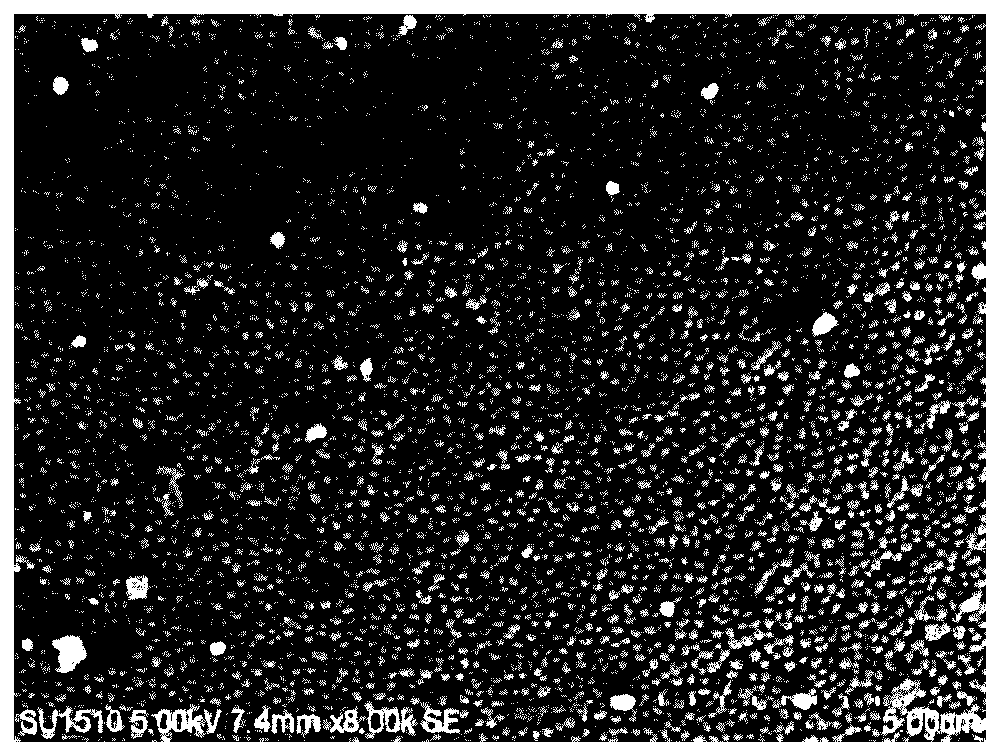
Figure 2 is a scanning electron microscope image of the supported titanium silicon molecular sieve/glass microbead composite material prepared in Example 1; [0043] Figure 3 is a loaded titanium silicon molecular sieve/glass microbead composite prepared in Example 2 Scanning electron microscopy image of the bead composite material; [0044] Figure 4 is a scanning electron microscopy image of the supported titanium silicon molecular sieve/glass microbead composite material prepared in Example 3; [0045] Figure 5 is a scanning electron microscope image prepared in Example 4 Scanning electron microscope image of the supported titanium silicon molecular sieve/glass microbead composite material; [0046] Figure 6 is a scanning electron microscope image of the supported titanium silicon molecular sieve/glass microbead composite material prepared in Example 5; [0047] Figure 7 is the scanning electron microscope image of the supported titanium silicon molecular sieve/glass microbead composite material prepared in Example 6; [0048] Figure 8 is the scanning of the supported titanium silicon molecular sieve/glass microbead composite material prepared in Comparative Example 1 Electron micrograph.
Detailed ways
[0049] In order to facilitate understanding of the present application, the present application will be described more comprehensively below with reference to the relevant drawings. The preferred embodiments of the present application are shown in the accompanying drawings. However, the present application may be implemented in many different forms and is not limited to the embodiments described herein. Rather, these embodiments are provided so that a thorough understanding of the disclosure of the present application will be provided.
[0050] Unless otherwise defined, all technical and scientific terms used herein have the same meaning as commonly understood by one of ordinary skill in the technical field to which this application belongs. The terminology used herein in the present application is for the purpose of describing specific embodiments only and is not intended to be limiting of the present application.
[0051]Terms:
[0052] The selection scope of the term "and/or" used in this article includes any one of two or more related listed items, and also includes any and all combinations of the related listed items, said any and all combinations include any two of the related listed items, any more of the related listed items, or a combination of all of the related listed items. For example, "A and/or B" includes three parallel solutions: A, B and "a combination of A and B".
[0053] In this article, unless otherwise stated, "one or more" means any one of the listed items or any combination of the listed items. Similarly, "one or more" and other words that mean "one or more" will also be understood in the same way unless otherwise stated.
[0054] In this article, "further", "further", "especially", "for example", "such as", "example", "example", etc. are used for description purposes and represent different technical solutions before and after. There is a correlation in the covered content, but it should not be understood as a limitation on the previous technical solution, nor should it be understood as a limitation on the protection scope of this article. In this article, if there is no other explanation, A (such as B), table
B is a non-limiting example of A, and it can be understood that A is not limited to B.
[0055] "Optionally", "optional", and "optional" in this article mean optional, that is, any one selected from the two parallel solutions of "yes" or "no". If there are multiple "optionals" in a technical solution, each "optional" will be independent unless otherwise specified and there is no contradiction or mutual restriction. In this application, descriptions such as "optionally containing" and "optionally containing" mean "containing or not containing" and "optional component X" means the presence or absence of component The component X.
[0056] In the "first aspect", "second aspect", "third aspect", "fourth aspect", etc. herein, the terms "first", "second", "third" and "fourth" ", etc. are only for descriptive purposes and cannot be understood as indicating or implying the relative importance or quantity, nor can they be understood as implicitly indicating the importance or quantity of the indicated technical features. Moreover, "first", "second", "third", "fourth", etc. are only for the purpose of non-exhaustive enumeration and description, and it should be understood that they do not constitute a closed limit to the quantity.
[0057] In this article, the technical features described in an open manner include closed technical solutions composed of the listed features, and also include open technical solutions containing the listed features.
[0058] In this article, it relates to a numerical interval (i.e., a numerical range). If there is no special explanation, the distribution of the optional numerical values in the numerical interval is regarded as continuous and includes the two numerical endpoints (i.e., the minimum value) of the numerical interval. and maximum value), and every value between these two numerical endpoints. Unless otherwise specified, when a numerical interval only points to integers within the numerical interval, including the two endpoint integers of the numerical range and every integer between the two endpoints is equivalent to directly enumerating each integer. When multiple numerical ranges are provided to describe a characteristic or characteristic, these numerical ranges can be combined. In other words, unless otherwise indicated, numerical ranges disclosed herein should be understood to include any and all subranges subsumed therein. The "numeric value" in this numerical interval can be any quantitative value, such as numbers, percentages, ratios, etc. The "numeric interval" can broadly include numerical interval types such as percentage intervals, proportion intervals, ratio intervals, etc.
[0059] In this article, the term "room temperature" or "normal temperature" generally refers to 4°C ~ 35°C, such as 20°C ± 5°C. In some embodiments herein, "room temperature" or "normal temperature" refers to 10°C ~ 30°C. In some embodiments herein, "room temperature" or "normal temperature" refers to 20°C ~ 30°C.
[0060] In this article, the method flow involves multiple steps. Unless there is a clear different description in this article, the execution of these steps is not strictly limited in order, and they can be executed in other orders than described. Moreover, any step may include multiple sub-steps or multiple stages. These sub-steps or stages are not necessarily executed at the same time, but can be executed at different times, and the order of execution is not necessarily sequential. It can be performed in turn or alternately with other steps or sub-steps or parts of stages of other steps or simultaneously.
[0061] The titanium-silicon molecular sieve nanoparticles obtained by directly reacting silicon sources and titanium sources in stainless steel hydrothermal crystallization kettles have problems such as easy agglomeration, uneven size, poor catalytic activity, high cost, and long growth cycle. defect. To this end, this application provides a method for preparing a titanium-silicon molecular sieve/glass microbead composite material to avoid the above defects and improve the catalytic performance of the titanium-silicon molecular sieve.
[0062] In the first aspect, the present application provides a preparation method of titanium silicon molecular sieve/glass microbead composite material, comprising the following steps:
[0063] The titanium silicon molecular sieve mother liquid and glass beads are placed in a micro reaction device with an equivalent diameter of 1.6mm ~ 16mm, and the micro reaction device is heated to crystallize the titanium silicon molecular sieve mother liquid and make the titanium silicon molecular sieve Loaded on the surface of the glass microbeads, the titanium silicon molecular sieve/glass microbeads composite material is prepared.
[0064] The preparation method of the titanium silicon molecular sieve/glass microbead composite material provided by this application uses a micro reaction device (equivalent diameter W16mm). Compared with the traditional use of hydrothermal crystallization kettles, the use of micro-reactors with specific equivalent diameters has better
Excellent heat transfer performance significantly increases the heating rate, thereby shortening the induction period and accelerating the nucleation process of the titanium-silicon molecular sieve, thus shortening the growth cycle of the composite material (at least as low as 0.1h) and reducing the cost of the titanium-silicon molecular sieve. The particle size can shorten the internal diffusion mass transfer path of reactants and products, improve the mass transfer efficiency, and increase the reaction rate. In addition, the use of micro-reactors can promote the heterogeneous nucleation of the titanium-silicon molecular sieve mother liquor and avoid homogeneous nucleation, thereby ensuring that the titanium-silicon molecular sieve is evenly loaded on the surface of the glass beads and avoiding the problem of easy agglomeration. This significantly improves the utilization rate of raw materials, improves catalytic performance, and significantly reduces the generation of waste water and waste.
[0065] In addition, the micro-reactor is smaller, which can ensure that it has a very narrow temperature and concentration gradient inside, making the overall crystallization conditions relatively uniform, so that the titanium-silicon molecular sieve growth process has strong consistency and can ensure The particle size uniformity of composite materials produced in different batches leads to excellent catalytic performance.
[0066] In summary, the preparation method provided by this application has the advantages of short growth cycle, high production efficiency, low cost and high batch stability, and the prepared composite material has a more uniform particle size.
[0067] In order to avoid the problems that the traditionally prepared titanium silicon molecular sieves are easy to agglomerate and easily cause membrane pore clogging during the separation process, some researchers have proposed granulating the titanium silicon molecular sieves or preparing the titanium silicon molecular sieves by loading, for example, using Cordierite or nanocarbon fibers are used as carriers. However, the granulation and molding method will cause the internal particles of the titanium silicon molecular sieve to be unable to participate in the catalytic process, resulting in low utilization rate. The binding force between the above-mentioned carrier and the titanium-silicon molecular sieve is poor, which can easily cause it to fall off. Moreover, the currently used carrier has a small specific surface area and is difficult to provide sufficient heterogeneous nucleation sites for the titanium-silicon molecular sieve mother liquor, resulting in a low loading capacity. At the same time, significant homogeneous nucleation will occur in the titanium-silica molecular sieve mother liquor, resulting in The waste of mother liquor produces a large amount of polluted wastewater. This application uses glass microbeads as carriers, and the titanium-silicon molecular sieve can only exist on the surface of the glass microbeads, thus completely solving the problem that the internal titanium-silicon molecular sieve cannot participate in catalysis.
[0068] In this application, crystallization is specifically heating and standing crystallization, that is, keeping the micro reaction device in a static state during the heating process.
[0069] It can be understood that the equivalent diameter can be used to compare the size and shape similarity of different shapes. When the equivalent diameters are similar, it means that their sizes (volume, area) are similar. In this application, equivalent diameter refers to the inner diameter of the microreactor. In some embodiments, the equivalent diameter of the micro-reactor device can be any value between 1.6mm and 16mm, for example, 2mm, 3mm, 4mm, 6mm, 8mm, 10mm, 12mm, 14mm.
[0070] In this application, the shape of the micro-reactor is not limited. For example, it can be a closed tubular channel, wherein the cross-section of the tubular channel can be circular or polygonal, such as square, rectangular, hexagonal, etc., preferably Is round. That is, the tubular channel is a cylindrical channel, so that it can have the largest specific surface area, further improving the heat transfer performance of the micro-reactor device and increasing its heating rate.
[0071] In order to improve the heat transfer performance, in this application, the material of the micro-reactor device is metal, such as stainless steel. Further, the stainless steel may specifically be 304 stainless steel or 316 stainless steel.
[0072] Further, the micro-reaction device is a liquid chromatography column made of stainless steel, and its two ends can be sealed with nuts.
[0073] In this application, the size of the glass beads is not limited, and glass beads of commonly used commercial sizes can be used. In some embodiments, the particle size of the glass microbeads is 70μn~150μn, for example, 80μm>90μm>100μm>110μm>120μm>130μm>140μm
[0074] In some embodiments, the mass ratio of glass beads and titanium silicon molecular sieve mother liquor is 1: (1~5), for example, 1:1, 1:3, 1:5. Regulating the mass ratio of the glass microbeads and the titanium-silicon molecular sieve mother solution within the above range can ensure the loading capacity of the titanium-silicon molecular sieve on the surface of the glass microbeads.
[0075] It should be noted that in this application, the titanium silicon molecular sieve is loaded on the surface of glass beads in the form of spherical crystals.
noodle.
[0076] In some embodiments, the titanium silicon molecular sieve mother liquor includes a titanium source, a silicon source, a template agent and water. It can be understood that "water" used in this application can specifically be deionized water, distilled water, pure water or ultrapure water. In this application, the types of titanium source, silicon source and template agent are not limited, and any well-known substances in the field of titanium-silicon molecular sieve preparation can be used. In some embodiments, the titanium source includes one or more of tetraethyl titanate, tetrabutyl titanate, and titanium tetrachloride; the silicon source includes tetraethyl orthosilicate and/or silica sol; the template agent Including one or more of tetrapropylammonium hydroxide, tetrabutylammonium hydroxide and piperidine quaternary ammonium hydroxide.
Further, the molar ratio of titanium source and silicon source is 1: (0.01~1), for example, 1:0.05, 1:0.1, 1:0.2, 1:0.5, 1:0.8; template agent and silicon source The molar ratio of silicon source to water is 1: (0.1~0.7), for example, 1:0.2, 1:0.3, 1:0.4, 1:0.5, 1:0.6; the molar ratio of silicon source to water is 1: (50~100), For example, 1:60, 1:70, 1:80, 1:90.
[0078] It should be noted that the calculation standard for the molar ratio of the silicon source to water is the sum of the water in the template agent and the water added during the removal of the organic solvent.
[0079] It can be understood that the preparation method of titanium silicon molecular sieve mother liquor can adopt common preparation techniques. As an illustration, the titanium silicon molecular sieve mother liquor is prepared by a method including the following steps:
[0080] The titanium source is dissolved in an organic solvent to prepare an organic solution containing the titanium source;
[0081] The template agent, silicon source, organic solution containing titanium source and water are mixed, aged, and the organic solvent is removed to prepare the titanium silicon molecular sieve mother liquor.
[0082] Further, the specific steps of mixing the template agent, the silicon source, the organic solution containing the titanium source and water can be: first mix the template agent with water to form a template agent solution, and then add the silicon source to the template agent solution. and organic solutions containing titanium sources.
[0083] Furthermore, the template agent solution can be directly purchased commercially. For example, the template agent can be a tetrapropyl ferric hydroxide solution with a mass concentration of 25%.
[0084] In this application, the choice of organic solvent is not limited, as long as it can dissolve the titanium source and has volatile characteristics. In some embodiments, the organic solvent includes alcoholic solvents and/or alkane solvents; wherein the alcoholic solvents include but are not limited to one or more of isopropanol, ethanol, n-butanol and tert-butanol; alkanes Solvents include, but are not limited to, one or more of n-hexane, isohexane and n-heptane.
[0085] Further, the molar ratio of organic solvent and titanium source is 1: (0.001~0.003).
[0086] In this application, the aging conditions are not limited, and the commonly used process parameters in the field of titanium silicon molecular sieve mother liquor preparation can be used. In some embodiments, the aging temperature is 20°C~80°C and the time is 3h~24h; preferably, the aging temperature is 40°C~60°C and the time is 5h~8h.
[0087] In this application, the method for removing the organic solvent is not limited, as long as the organic solvent can be removed as completely as possible. In some embodiments, the method for removing the organic solvent is heat treatment; wherein, the temperature of the heat treatment can be 60°C~95°C, and the time can be 10min~45min.
[0088] It should be noted that in the process of removing the organic solvent, the quality of the mother liquor will change. In order to avoid the change of its quality, water can be added from time to time in the process of removing the organic solvent.
[0089] In this application, the method or device used for heating the micro-reactor is not limited. As an example, the micro-reactor is placed in a homogeneous reactor for heating.
[0090] In some embodiments, the heating temperature for heating the micro reaction device is 100°C~170°C, and the heating time is 0.1h~24h. That is, the crystallization temperature is 100°C~170°C and the time is 0.1h~24h.
[0091] In some embodiments, after heating the micro-reaction device, it also includes conducting the heating on the obtained material.
Separation, washing and drying steps.
[0092] Wherein, the method for separation can be centrifugal separation; the number of washings is not limited, as long as unreacted substances can be removed; the drying temperature can be 80°C~120°C.
[0093] In some embodiments, after drying the heated material, it further includes: the step of roasting the dried material to remove the template agent.
[0094] Optionally, the temperature of roasting is 550°C~600°C, and the time is 5h~8h.
[0095] In some embodiments, before placing the glass beads in the micro reaction device, a step of etching the glass beads with subcritical water is also included. Through etching treatment, the attachment sites on the surface of glass microbeads can be increased, thereby facilitating the loading of titanium silicon molecular sieves on the surface of glass microbeads.
[0096] It can be understood that water in a subcritical state refers to liquid water with a temperature reaching 250°C~310°C.
[0097] In some embodiments, it also includes the steps of washing the etched glass beads with water for the first time to reach a pH of 7 and drying the glass beads after the first water washing.
[0098] In some embodiments, after etching the glass beads, it also includes:
[0099] The etched glass beads are sequentially subjected to the steps of pickling, water washing, drying and baking.
[0100] Wherein, the steps of pickling, water washing, drying and roasting can be as follows:
1) After the glass beads are pickled, they are washed with water and dried for the second time;
[0102] 2) The glass beads after being dried for the first time are washed with water for the third time, dried and roasted for the third time in sequence.
[0103] In some embodiments, the pickling step includes: placing the glass beads in an inorganic acid with a concentration of 0.5M~1.0M and soaking it for 5h~8h; wherein, the selection of the inorganic acid is not limited, for example, it can It is one or more of hydrochloric acid, sulfuric acid, phosphoric acid and nitric acid.
[0104] It can be understood that the second washing with water is to remove excess inorganic acid, as long as the pH of the glass beads can be washed to 7.
[0105] In this application, the water used for the third wash is flowing water. In some embodiments, the water flow rate of the third water washing is 3mL/min~5mL/min, and the time is 5h~8h.
[0106] In some embodiments, the temperatures of the first drying, the second drying and the third drying are independently 80°C to 120°C.
[0107] In some embodiments, the temperature of roasting is 400°C~600°C, and the time is 3h~6h.
[0108] According to a specific embodiment, the preparation method of the titanium silicon molecular sieve/glass microbead composite material can be as follows:
[0109] S100: Use subcritical water to etch the glass beads, and perform the first water washing and the first drying;
S200: The glass beads obtained in step S100 are acid washed, washed with water for the second time and dried for the second time in sequence;
S300: The glass beads obtained in step S200 are sequentially washed for the third time, dried and roasted for the third time, and set aside;
S400: Dissolve the titanium source in the organic solvent to prepare an organic solution containing the titanium source;
S500: Mix template solution, silicon source, organic solution containing titanium source and water, age, remove organic solvent, and prepare titanium silicon molecular sieve mother liquor;
S600: Place the glass beads obtained in step S300 and the titanium silicon molecular sieve mother liquor obtained in step S500 in a micro reaction device with an equivalent diameter of 1.6 mm ~ 16 mm, and heat and let stand the micro reaction device, titanium silicon molecular sieve
The mother liquid is crystallized and the titanium silicon molecular sieve is loaded on the surface of the glass beads;
[0115] S700: The materials prepared in step S600 are sequentially separated, washed, dried and roasted to prepare titanium silicon molecular sieve/glass microbead composite materials.
[0116] In the second aspect, the present application provides a titanium silicon molecular sieve/glass microbead composite material, which is prepared by the preparation method described in the first aspect.
[0117] The titanium silicon molecular sieve/glass microbead composite material provided by this application has uniform particle size and excellent catalytic performance.
[0118] In some embodiments, the titanium silicon molecular sieve in the titanium silicon molecular sieve/glass microbead composite material is nanoparticles, and the average particle size of the nanoparticles is 190nm~240nm.
[0119] In the third aspect, the present application provides an application of the titanium silicon molecular sieve/glass microbead composite material as described in the second aspect as a catalyst.
[0120] The present application will be further described in detail below in conjunction with specific embodiments. It should be understood that these examples are only used to illustrate the present application and are not intended to limit the scope of the present application. For experimental methods that do not indicate specific conditions in the following examples, priority is given to the reference 1 given in this application. You can also follow the experimental manual or conventional conditions in this field, you can also follow the conditions recommended by the manufacturer, or refer to this document. Experimental methods known in the field.
[0121] In the following specific examples, the measurement parameters of the raw material components are involved. If there is no special explanation, there may be slight deviations within the range of weighing accuracy. Involving temperature and time parameters, the acceptable deviation caused by the instrument's testing accuracy or operating accuracy is allowed. "Room temperature" refers to 25°C.
[0122] Embodiment 1
1) Add 5g glass beads and 195g deionized water to the 250mL autoclave reactor, then seal the autoclave reactor and gradually heat it up to 300°C, and then turn off the heating power after maintaining the subcritical state for 5min~10min. , cool to room temperature, take out the etched glass beads, wash the glass beads with deionized water several times until the pH reaches 7, and then place the etched glass beads in an oven at 80°C to dry before use.
2) Take 2.5g of the etched and dried glass beads in step 1) in a 250mL Erlenmeyer flask, and add 200mL of a hydrochloric acid solution with a concentration of 0.5M. Then, it was shaken for 5 hours in a constant temperature oscillator with a rotation speed of 200 r/min and a temperature of 40°C for pickling. The glass beads were then washed several times with deionized water until the pH reached 7, and then placed in an oven at 80°C to dry before use.
3) Take 5g of the glass beads treated in step 2), wash them with flowing deionized water at a flow rate of 5mL/min for 5h~8h at 80°C, and then dry them in an oven at 80°C. Backup.
[0126] 4) Take 3g of the treated glass beads in step 3) and bake them in a muffle furnace at 400°C for 5 hours to obtain a glass beads carrier, whose scanning electron microscope picture is shown in Figure 1. As can be seen from Figure 1, the surface of the glass microbeads has changed from the original smooth and dense structure to a core-shell structure evenly covered with fins. The existence of the fin structure has greatly increased the specific surface area of the glass microbead carrier (from 0.0029m<sup>2</sup>/g to 154m<sup>2</sup>/g), providing a large number of nucleation sites for subsequent loading of titanium silicon molecular sieves.
5) Use a pipette to take 3 mL of tetrapropylammonium hydroxide solution in a 25 mL beaker at room temperature, and add 250 μl of deionized water, and drop 2 mL of tetraethyl orthosilicate under vigorous stirring, and stir until the solution is clear and transparent. Then, a mixed solution of 70 μl tetraethyl titanate and 3 mL isopropyl alcohol was slowly added dropwise. Subsequently, after stirring at room temperature for 2h~3h, heat and stir in a water bath at 80°C for 15min~40min to volatilize isopropyl alcohol and ethanol to prepare titanium silicon molecular sieve mother liquor. It should be noted that during the volatilization of alcohol, deionized water needs to be added from time to time to maintain the initial quality of the liquid.
6) Take 1.0g of the calcined glass bead carrier in step 4) and place it in a circular tubular stainless steel microchannel with an inner diameter of 4mm, an outer diameter of 6mm, and an equivalent diameter of 4mm, and then add 1.0g of step 5). The prepared titanium silicon molecular sieve mother liquor is used to seal the microchannel
After closing, place it in a homogeneous reactor at 130°C for crystallization for 5 hours. The material after standing for crystallization was then roasted in a muffle furnace at 550°C for 6 hours to remove the template agent (tetrapropylammonium hydroxide) to obtain a supported titanium silicon molecular sieve/glass microbead composite material. A SU1510 scanning electron microscope was used to conduct scanning electron microscopy analysis of the supported titanium silicon molecular sieve/glass microbead composite material, and the scanning electron microscopy image shown in Figure 2 was obtained. It can be seen from Figure 2 that the spherical granular titanium silicon molecular sieve has grown evenly on the surface of the glass bead carrier, and the particle size is relatively uniform.
[0129] The catalytic performance test of the supported titanium silicon molecular sieve/glass microbead composite material prepared in this example is as follows:
[0130] 0.1963g cyclohexanone and 0.8412g ammonia water are mixed with 17g mass concentration of 85% tert-butanol to form solution A. Solution B was formed by mixing 0.4947g hydrogen peroxide and 17g tert-butyl alcohol. Mix solution A and 0.3g of supported titanium silicon molecular sieve/glass microbead composite material and preheat it at 600 rpm in a water bath at 80°C for 5 minutes, then add solution B and continue the reaction for 15 minutes. The reacted solution was then cooled to room temperature, centrifuged, and 1.5 mL of the supernatant was placed in a gas chromatograph. Agilent AT ICP-8800 gas chromatography was used to quantitatively analyze the components of the reacted solution. The test results showed the conversion of cyclohexanone. The rate reaches 99%, and the selectivity of the product cyclohexanone oxime reaches 100%. This shows that the supported titanium silicon molecular sieve/glass microbead composite material provided by this application has excellent catalytic performance.
Embodiment 2
The preparation method of Example 2 is basically the same as that of Example 1, except that the quality of the glass beads added in step 6) is 0.5g, the quality of the titanium silicon molecular sieve mother liquor is 1g, and the crystallization The time is 3h. Step 6) The details are as follows:
[0133] Take 0.5g of the calcined glass bead carrier in step 4) and place it in a circular tubular stainless steel microchannel with an inner diameter of 4mm, an outer diameter of 6mm, and an equivalent diameter of 4mm, and then add 1.0g of the glass beads obtained in step 5). The titanium silicon molecular sieve mother liquor was sealed in the microchannel and placed in a homogeneous reactor at 130°C for crystallization for 3 hours. The material after standing for crystallization was then roasted in a muffle furnace at 550°C for 6 hours to remove the template agent (tetrapropylammonium hydroxide) to obtain a supported titanium silicon molecular sieve/glass microbead composite material. A SU1510 scanning electron microscope was used to perform scanning electron microscopy analysis on the supported titanium silicon molecular sieve/glass microbead composite material, and the scanning electron microscopy image shown in Figure 3 was obtained. It can be seen from Figure 3 that the spherical granular titanium silicon molecular sieve has grown evenly on the surface of the glass bead carrier, and the particle size is relatively uniform.
[0134] The catalytic performance test was performed on the supported titanium silicon molecular sieve/glass microbead composite material prepared in this example. The test steps were the same as in Example 1. The test results show that the conversion rate of cyclohexanone reaches 99%, and the selectivity of the product cyclohexanone oxime reaches 100%. This shows that the supported titanium silicon molecular sieve/glass microbead composite material provided in this application has excellent catalytic performance.
[0135] Embodiment 3
The preparation method of Example 3 is basically the same as the preparation method of Example 1, except that: the quality of the glass beads added in step 6) is 0.2g, the quality of the titanium silicon molecular sieve mother liquor is 1g, crystallization The time is 1h. Step 6) The details are as follows:
[0137] Take 0.2g of the calcined glass bead carrier in step 4) and place it in a circular tubular stainless steel microchannel with an inner diameter of 4mm, an outer diameter of 6mm, and an equivalent diameter of 4mm, and then add 1.0g of the glass beads obtained in step 5). The titanium silicon molecular sieve mother liquor was sealed and placed in a homogeneous reactor at 130°C for crystallization for 1 hour. The material after standing for crystallization was then roasted in a muffle furnace at 550°C for 6 hours to remove the template agent (tetrapropylammonium hydroxide) to obtain a supported titanium silicon molecular sieve/glass microbead composite material. A SU1510 scanning electron microscope was used to perform scanning electron microscopy analysis on the supported titanium silicon molecular sieve/glass microbead composite material, and the scanning electron microscopy image shown in Figure 4 was obtained. As can be seen from Figure 4, the spherical granular titanium silicon molecular sieve has evenly grown into glass beads.
carrier surface, and the particle size is relatively uniform.
[0138] The catalytic performance test was performed on the supported titanium silicon molecular sieve/glass microbead composite material prepared in this example. The test steps were the same as in Example 1. The test results show that the conversion rate of cyclohexanone reaches 99%, and the selectivity of the product cyclohexanone oxime reaches 100%. This shows that the supported titanium silicon molecular sieve/glass microbead composite material provided in this application has excellent catalytic performance.
Embodiment 4
[0140] The preparation method of Example 4 is basically the same as that of Example 1, except that in step 6) the inner diameter of the circular tubular stainless steel microchannel is 6 mm, and the crystallization time is 1 h. Step 6) The details are as follows:
[0141] Take 0.2g of the calcined glass bead carrier in step 4) and place it in a circular tubular stainless steel microchannel with an inner diameter of 6mm, an outer diameter of 8mm, and an equivalent diameter of 6mm, and then add 1.0g of the glass beads obtained in step 5). The titanium silicon molecular sieve mother liquor was sealed in the microchannel and placed in a homogeneous reactor at 130°C for crystallization for 1 hour. The material after standing for crystallization was then roasted in a muffle furnace at 550°C for 6 hours to remove the template agent (tetrapropylammonium hydroxide) to obtain a supported titanium silicon molecular sieve/glass microbead composite material. A SU1510 scanning electron microscope was used to perform scanning electron microscopy analysis on the supported titanium silicon molecular sieve/glass microbead composite material, and the scanning electron microscopy image shown in Figure 5 was obtained. It can be seen from Figure 5 that the spherical granular titanium silicon molecular sieve has grown uniformly on the surface of the glass bead carrier, and the particle size is relatively uniform.
[0142] The catalytic performance test was performed on the supported titanium silicon molecular sieve/glass microbead composite material prepared in this example. The test steps were the same as in Example 1. The test results show that the conversion rate of cyclohexanone reaches 99%, and the selectivity of the product cyclohexanone oxime reaches 100%. This shows that the supported titanium silicon molecular sieve/glass microbead composite material provided in this application has excellent catalytic performance.
Embodiment 5
[0144] The preparation method of Example 5 is basically the same as that of Example 1, except that the inner diameter of the circular tubular stainless steel microchannel in step 6) is 8 mm, and the crystallization time is 1 h. Step 6) The details are as follows:
[0145] Take 0.2g of the calcined glass bead carrier in step 4) and place it in a circular tubular stainless steel microchannel with an inner diameter of 8mm, an outer diameter of 10mm, and an equivalent diameter of 8mm, and then add 1.0g of the glass beads obtained in step 5). The titanium silicon molecular sieve mother liquor was sealed in the microchannel and placed in a homogeneous reactor at 130°C for crystallization for 1 hour. The material after standing for crystallization was then roasted in a muffle furnace at 550°C for 6 hours to remove the template agent (tetrapropylammonium hydroxide) to obtain a supported titanium silicon molecular sieve/glass microbead composite material. A SU1510 scanning electron microscope was used to perform scanning electron microscopy analysis on the supported titanium silicon molecular sieve/glass microbead composite material, and the scanning electron microscopy image shown in Figure 6 was obtained. It can be seen from Figure 6 that the spherical granular titanium silicon molecular sieve has grown uniformly on the surface of the glass bead carrier, and the particle size is relatively uniform.
[0146] The catalytic performance test was performed on the supported titanium silicon molecular sieve/glass microbead composite material prepared in this example. The test steps were the same as in Example 1. The test results show that the conversion rate of cyclohexanone reaches 99%, and the selectivity of the product cyclohexanone oxime reaches 100%. This shows that the supported titanium silicon molecular sieve/glass microbead composite material provided in this application has excellent catalytic performance.
[0147] Embodiment 6
[0148] The preparation method of Example 6 is basically the same as that of Example 1, except that a cube-shaped stainless steel microchannel is used to replace the circular tubular stainless steel microchannel in step 6), and the cube-shaped stainless steel microchannel . Step 6) The details are as follows:
[0149] Take 0.5g of the calcined glass microbead carrier in step 4) and place it in a cube-shaped stainless steel microchannel with an equivalent diameter of 4mm, and then add 1.0g of the titanium silicon molecular sieve mother liquor prepared in step 5). After the channel is sealed, it is placed in a homogeneous environment at 130°C.
The reactor was left to crystallize for 3 hours. The material after standing for crystallization was then roasted in a muffle furnace at 550°C for 6 hours to remove the template agent (tetrapropylammonium hydroxide) to obtain a supported titanium silicon molecular sieve/glass microbead composite material. A SU1510 scanning electron microscope was used to perform scanning electron microscopy analysis on the supported titanium silicon molecular sieve/glass microbead composite material, and the scanning electron microscopy image shown in Figure 7 was obtained. It can be seen from Figure 7 that the spherical granular titanium silicon molecular sieve has grown uniformly on the surface of the glass bead carrier, and the particle size is relatively uniform.
[0150] The catalytic performance test was performed on the supported titanium silicon molecular sieve/glass microbead composite material prepared in this example. The test steps were the same as in Example 1. The test results show that the conversion rate of cyclohexanone reaches 99%, and the selectivity of the product cyclohexanone oxime reaches 100%. This shows that the supported titanium silicon molecular sieve/glass microbead composite material provided in this application has excellent catalytic performance.
Comparative example 1
[0152] The preparation method of Comparative Example 1 uses a traditional stainless steel hydrothermal crystallization kettle as the reactor. That is, a stainless steel hydrothermal crystallization kettle is used to replace the circular tubular stainless steel microchannel in Example 1. Step 6) The details are as follows:
[0153] Take 1.0g of the roasted glass bead carrier in step 4) and place it in a stainless steel hydrothermal crystallization kettle, then add 10.0g of the titanium silicon molecular sieve mother liquor prepared in step 5), and place the hydrothermal crystallization kettle Crystallize in a homogeneous reactor at 170°C for 72 hours. The material after standing for crystallization was then roasted in a muffle furnace at 550°C for 6 hours to remove the template agent (tetrapropylammonium hydroxide) to obtain a supported titanium silicon molecular sieve/glass microbead composite material. A SU1510 scanning electron microscope was used to conduct scanning electron microscopy analysis on the supported titanium silicon molecular sieve/glass microbead composite material, and the scanning electron microscopy image shown in Figure 8 was obtained. It can be seen from Figure 8 that the spherical granular titanium silicon molecular sieve is difficult to grow uniformly on the surface of the glass bead carrier, the particle size is large (average particle size 350nm), and the particle size is uneven.
[0154] The catalytic performance test was performed on the supported titanium silicon molecular sieve/glass microbead composite material prepared in this comparative example. The test steps were the same as in Example 1. The test results show that the conversion rate of cyclohexanone reaches 91.7%, and the selectivity of the product cyclohexanone oxime reaches 99%. This shows that the catalytic performance of the supported titanium silicon molecular sieve/glass microbead composite material provided in Comparative Example 1 is poor. [0155] From the test results of the examples and comparative examples, it can be seen that the preparation method provided by the application can make the size and distribution of different batches of loaded titanium silicon molecular sieve/glass microbead composite materials uniform, that is, the synthesis between different batches It has high stability and good catalytic performance. However, the distribution and size of the supported titanium silicon molecular sieve/glass microbead composite material prepared by traditional methods are uneven, resulting in a significant reduction in its catalytic performance.
[0156] Further, through the test results of Example 1 and Example 6, it can be seen that the uniform load and particle size of the loaded titanium silicon molecular sieve/glass microbead composite material can be achieved by regulating the size of the reaction vessel within the scope of the present application. The size is uniform and has no obvious relationship with the shape of the reaction vessel.
[0157] Each technical feature of the above-described embodiments can be combined in any way. In order to make the description concise, all possible combinations of each technical feature in the above-described embodiments are not described. However, as long as the combination of these technical features does not If there are any contradictions, they should be considered to be within the scope of this record.
[0158] The above-described embodiments only express several embodiments of the present application. The descriptions are relatively specific and detailed, but they cannot be understood as limiting the scope of the invention patent. It should be noted that, for those of ordinary skill in the art, several modifications and improvements can be made without departing from the concept of the present application, and these all fall within the protection scope of the present application. Therefore, the scope of protection of the patent of this application should be determined by the appended claims, and the accompanying drawings can be used to explain the scope of the claims.
1 sheet
Sheet 1
Every citation, both ways
| Document | Relation | Office | Category | Cited during | Relevant claims |
|---|---|---|---|---|---|
| CN107694551A | Cites | China | A | Search report | 1-13 |
| CN113308268A | Cites | China | Y | Search report | 10-13 |
| CN1398674A | Cites | China | YX | Search report | 10-13 |
2 members in 1 office
Members2
| Document | Office | Kind | |
|---|---|---|---|
| CN117138835AThis record | China | A | |
| CN117138835B | China | B |
3 legal events, as the office reported them to INPADOC
Over the term
Point at a mark for the eventEvents
| Event | Code | |
|---|---|---|
| Patent grantGrantedGR01 | GR01 | |
| Entry into force of request for substantive examinationSE01 | SE01 | |
| PublicationPB01 | PB01 |
Numbers
- Publication
- 117138835
- Application
- 11005324
Titles2
- Chinese
- 钛硅分子筛/玻璃微珠复合材料及其制备方法和应用
- English
- Titanium silicon molecular sieve/glass microbead composite material and its preparation method and application
Classification
- CPC, 6
- C01B39/06
- B01J29/89
- C07C249/04
- C01P2004/62
- C01P2004/03
- B01J2229/60
- IPC, 4
- B01J29 89
- C01B39 06
- C07C249 04
- C07C251 44